

Expanding Educational Opportunity for Every Massachusetts Student
Join the growing coalition of schools, nonprofits, businesses, and community leaders urging the Governor to opt Massachusetts into the Federal Scholarship Tax Credit program.

Stand with others calling for action.New Resources for Students.
No Cost to the Commonwealth.
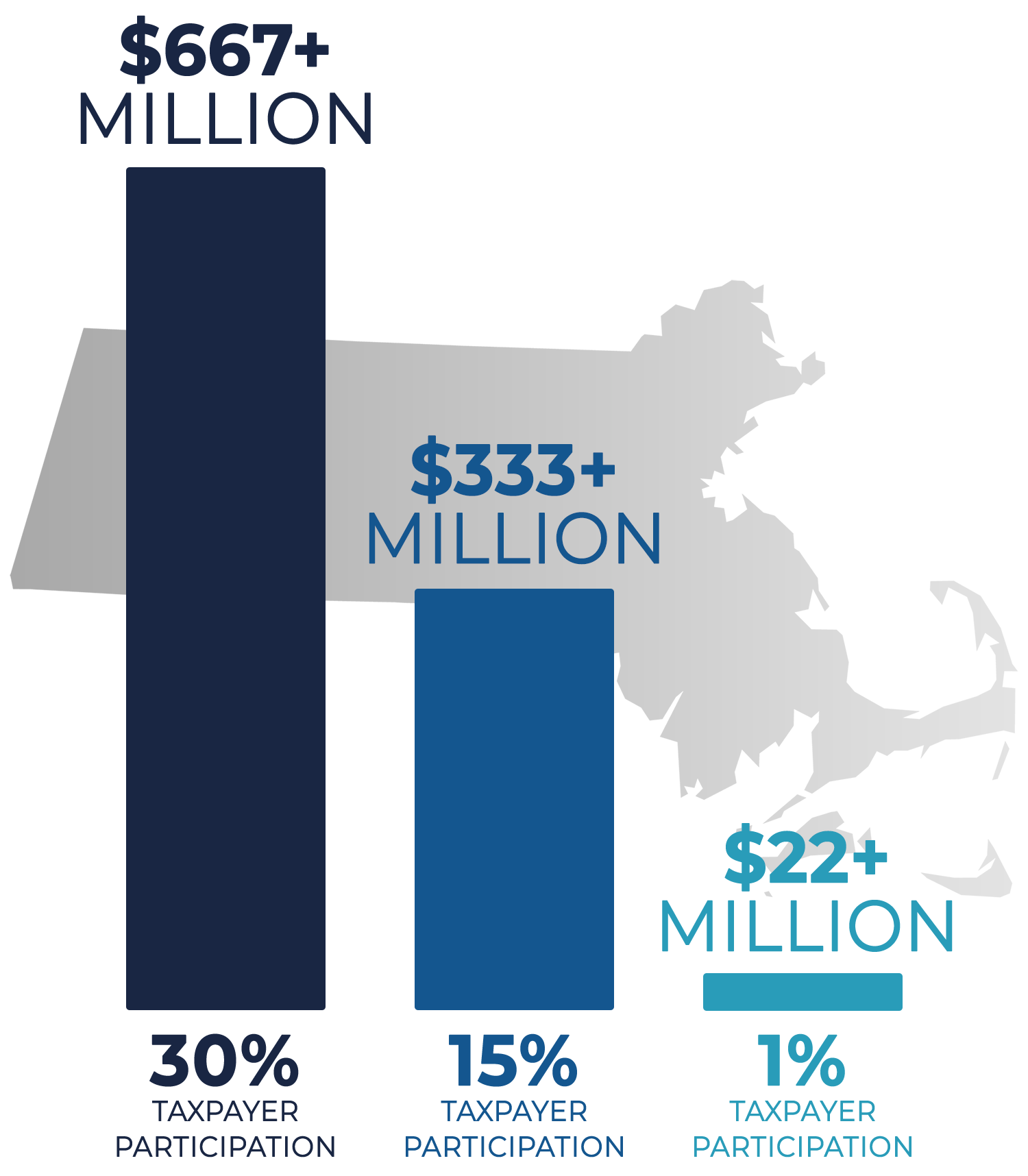
The Federal Scholarship Tax Credit allows taxpayers to receive a dollar-for-dollar federal tax credit for contributions to nonprofit Scholarship Granting Organizations. Those organizations distribute scholarships to K–12 students for tutoring, after-school programs, special education services, tuition assistance, and more.
Massachusetts can only benefit if the Governor opts in. Otherwise, residents can still contribute and claim the credit, but their dollars fund scholarships in other states.
The program leverages private contributions, not state spending. If just 15% of Massachusetts taxpayers participated, it could generate more than $333 million annually in scholarship support.
Massachusetts is consistently classified as a federal “donor state” — we send more to Washington than we get back.
This is a chance to bring some of that money home.

Why It Matters Here
#1
Massachusetts now has among the widest achievement gaps in the country.
5th
Highest home values in the country — 5th most expensive state to live in.
33,000
People moved out of Massachusetts in a single year.
This is a chance to direct new resources toward the students and families who need them most.
How It Works
Contribute.
A taxpayer donates to an approved Scholarship Granting Organization.
Claim the Credit.
They receive a 100% federal tax credit, up to $1,700/year.
Students Benefit.
Scholarships go to eligible K–12 students for a wide range of educational expenses.

What Scholarships Can Be Used For
Momentum
“It supports donors to give more money to our schools. I would be crazy not to opt in.”
— Gov. Jared Polis (D), Colorado

“School choice is good for students and parents… we can invest in the public school students most in need.”
— Gov. Josh Stein (D), North Carolina

More than two-thirds of Massachusetts respondents support the Governor opting in (Pioneer Institute).

Frequently Asked Questions
-
No. Funded entirely through private contributions. Massachusetts’ funding formula is unaffected.
-
No. Donors direct a portion of their existing federal tax liability toward scholarships.
-
Residents can still donate and claim the credit, but scholarships go to students in other states.
A Coalition Built Across Massachusetts
Statewide Reach
MEOC represents more than 13,000 organizations that collectively employ over 1.4 million people and serve over 2.5 million adults and youth across the Commonwealth. Spanning schools, community partners, and organizations from the Berkshires to the Cape, the Coalition is working together to expand educational opportunities for every student in Massachusetts.












































Join the Coalition
Coalition members play an active role by committing to three responsibilities. First, members help educate their stakeholders, such as staff, families, partners, and broader community networks, about the program, its impact, and opportunities for advocacy. Second, members agree to have their organization’s logo included on coalition materials, signaling visible support and helping to build collective credibility. Third, members participate in advocacy efforts by engaging with the Governor and state legislators, and expressing their support for the Governor opting into the Federal Scholarship Tax Credit program.